This post is maintained by Bytebase, an open-source database governance platform. We update the post every year.
What are the criteria?
- Open source.
- Web-based. Can be accessed via browser.
- Can be self-hosted. Tools that don't offer a self-hosted version are not included.
- General-purpose. Not specialized in a specific database type.
- Actively maintained. Judged from repository activity, and re-checked at every refresh; see the activity table at the end.
The five picks fall into two groups:
- Query-first: DbGate, CloudBeaver, and Bytebase SQL Editor focus on the SQL query and editing experience.
- BI-first: Metabase and Redash are visualization and dashboarding tools that happen to include capable SQL editors.
One disclosure before the list: SQL Editor is our own product. We put it in the query-first group where it belongs rather than at the top of the page, and we list its cons like everyone else's. Judge accordingly.
DbGate
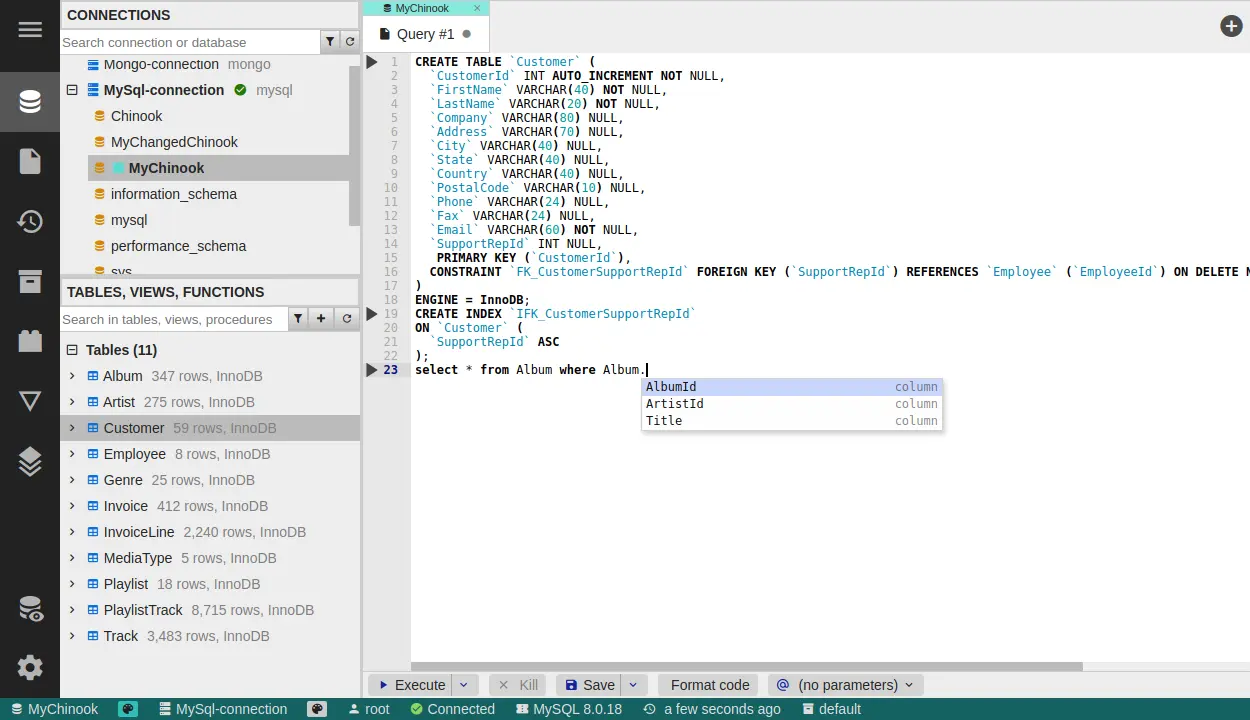
DbGate is the closest thing on this list to a classic SQL client in a browser: connections, query tabs, schema browsing, inline data editing, import/export, all in one lightweight container (or as a desktop app from the same codebase).
Strengths
- Cross-platform: The same tool runs as a web app or a standalone desktop application.
- Schema and data editor: Visual editing of structures and rows, not just query results.
- Lightweight: One container, no platform to stand up, connected in minutes.
Cons
- Development is thin: single-digit merged PRs per month, essentially a very small team. Fine for a client tool, but don't expect fast fixes.
- GPL-3.0 licensing needs a look if you plan to embed or redistribute it.
Verdict: the best pick if what you want is simply "DBeaver-ish, but in a browser, in five minutes." Individual developers and small teams should start here.
CloudBeaver
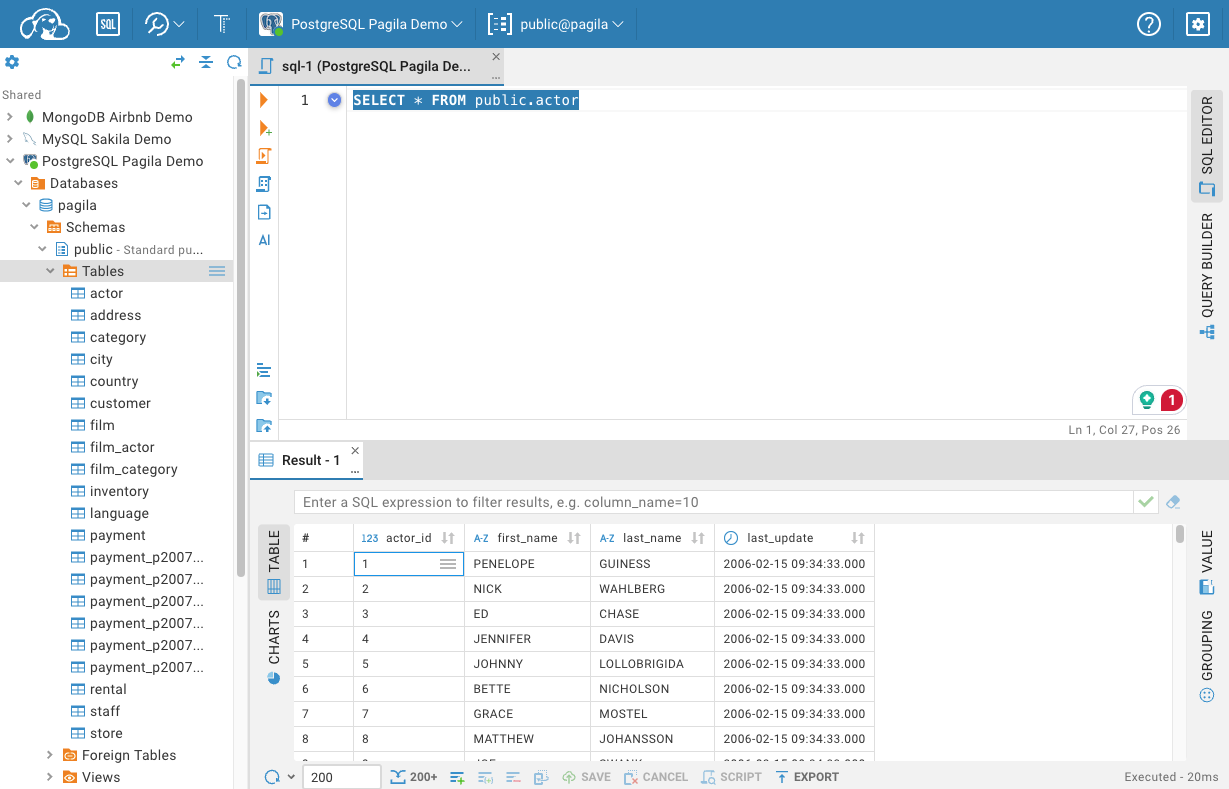
CloudBeaver is the web offering from the team behind DBeaver, arguably the most widely used open-source desktop database tool.
Strengths
- DBeaver pedigree: Inherits the mature driver ecosystem, so the long tail of databases is covered better than anywhere else on this list.
- Team-oriented: Shared connections and user management out of the box.
- Apache 2.0: The most permissive license here.
Cons
- The web version trails desktop DBeaver: long-time DBeaver users will keep reaching for features that haven't crossed over.
- The interesting enterprise capabilities (cloud IAM integrations, advanced access management) live in the commercial editions, not the community one.
Verdict: the safe institutional choice for a shared, read-and-query web client, especially if your team already lives in DBeaver.
SQL Editor (Bytebase)
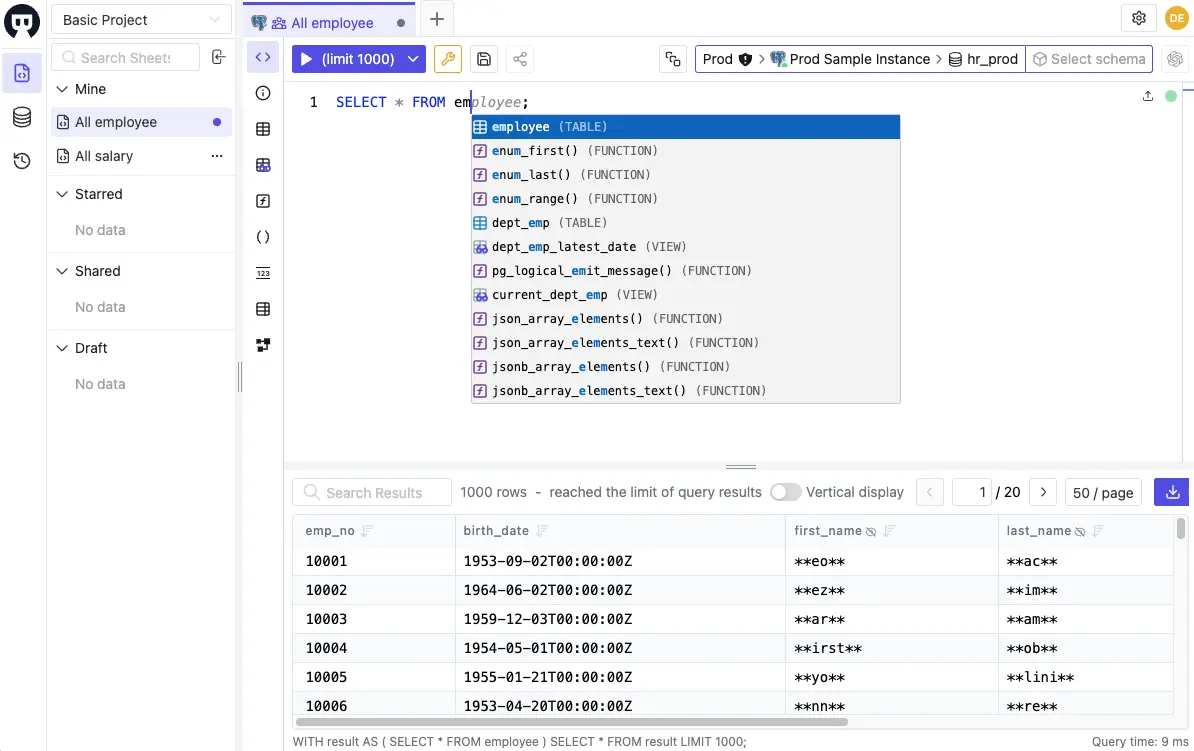
SQL Editor is the web SQL client built into the Bytebase platform (this is our product). It runs stand-alone or embedded white-label into an internal platform. The design bet is different from the two tools above: the editor is a governed execution path, not just a client.
Strengths
- Access control at the statement level: Who can query which database, table, or column, with just-in-time grants.
- Dynamic data masking: Sensitive columns are masked in query results based on the runner's role.
- Audit logging: Every executed statement is recorded, filterable, and exportable.
- Policy as code: A Terraform provider and API codify access and masking policies.
Cons
- It is not a lightweight client: you deploy the Bytebase platform to get it. If you just want a personal query pad, this is overkill.
- The governance features that make it interesting (masking, access workflows) are largely in the paid plans; the MIT-licensed community version is a smaller product.
Verdict: pick it when the requirement is "developers can query production, and compliance can prove what happened," not when the requirement is a nicer psql.
Metabase
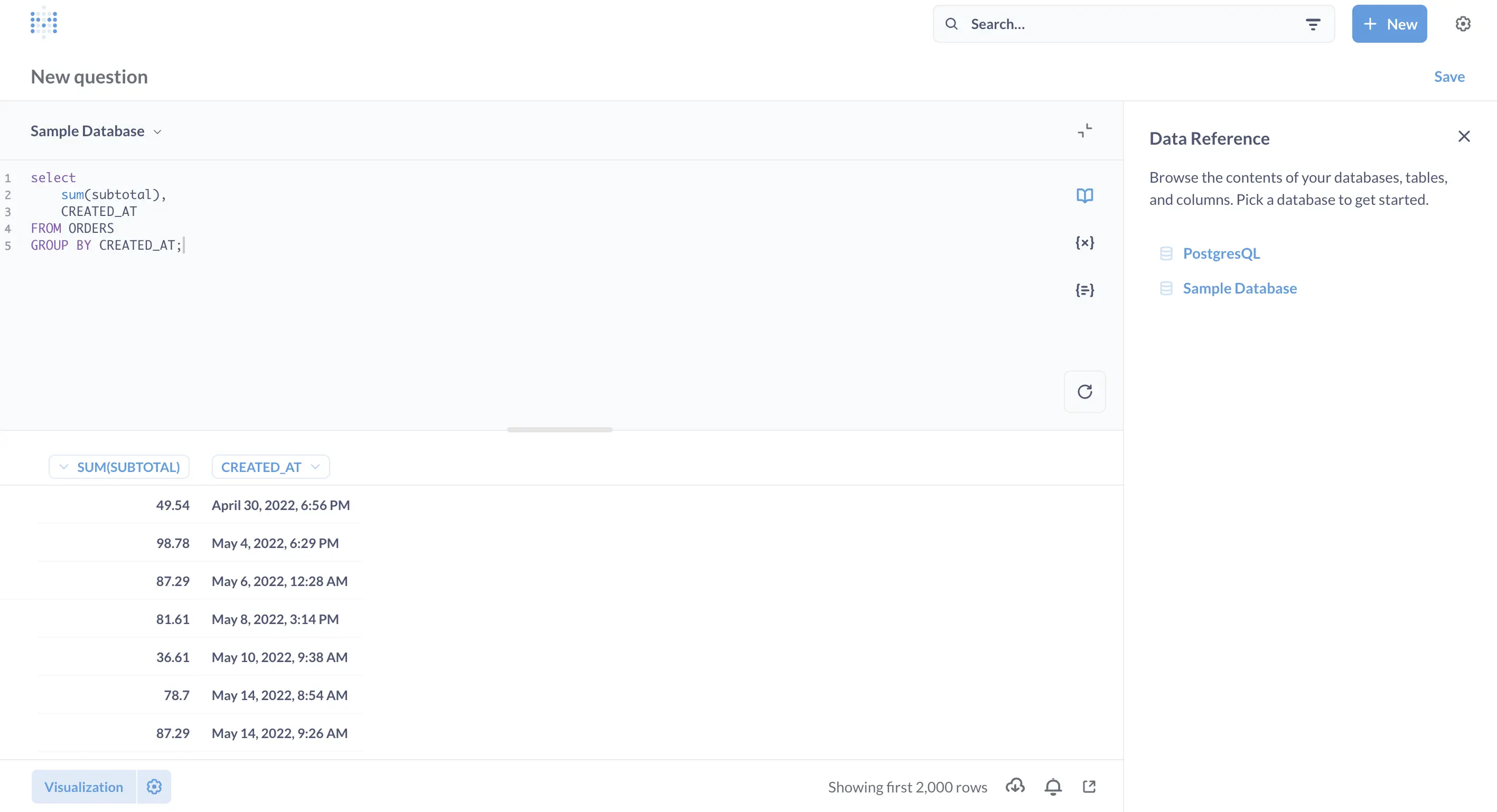
Metabase is an open-source BI tool: visual query builder, dashboards, scheduled reports. Its native SQL editor is good enough that plenty of teams use Metabase as their de facto SQL workbench.
Strengths
- No-code query builder for non-technical users, with a real SQL editor behind it.
- Dashboards, alerts, scheduled reports: The full self-service BI loop.
- Enormous momentum: By far the most active project on this list.
Cons
- It's a BI platform, so query-first users carry the weight of one: semantic modeling, permissions tied to collections, an app-shaped deployment.
- Licensing is a maze: AGPL-3.0 community edition, proprietary enterprise edition, and a separate embedding license.
Verdict: if dashboards for the wider company are anywhere on your roadmap, choose Metabase and get the SQL editor for free. If they aren't, it's a heavyweight way to run queries.
Redash
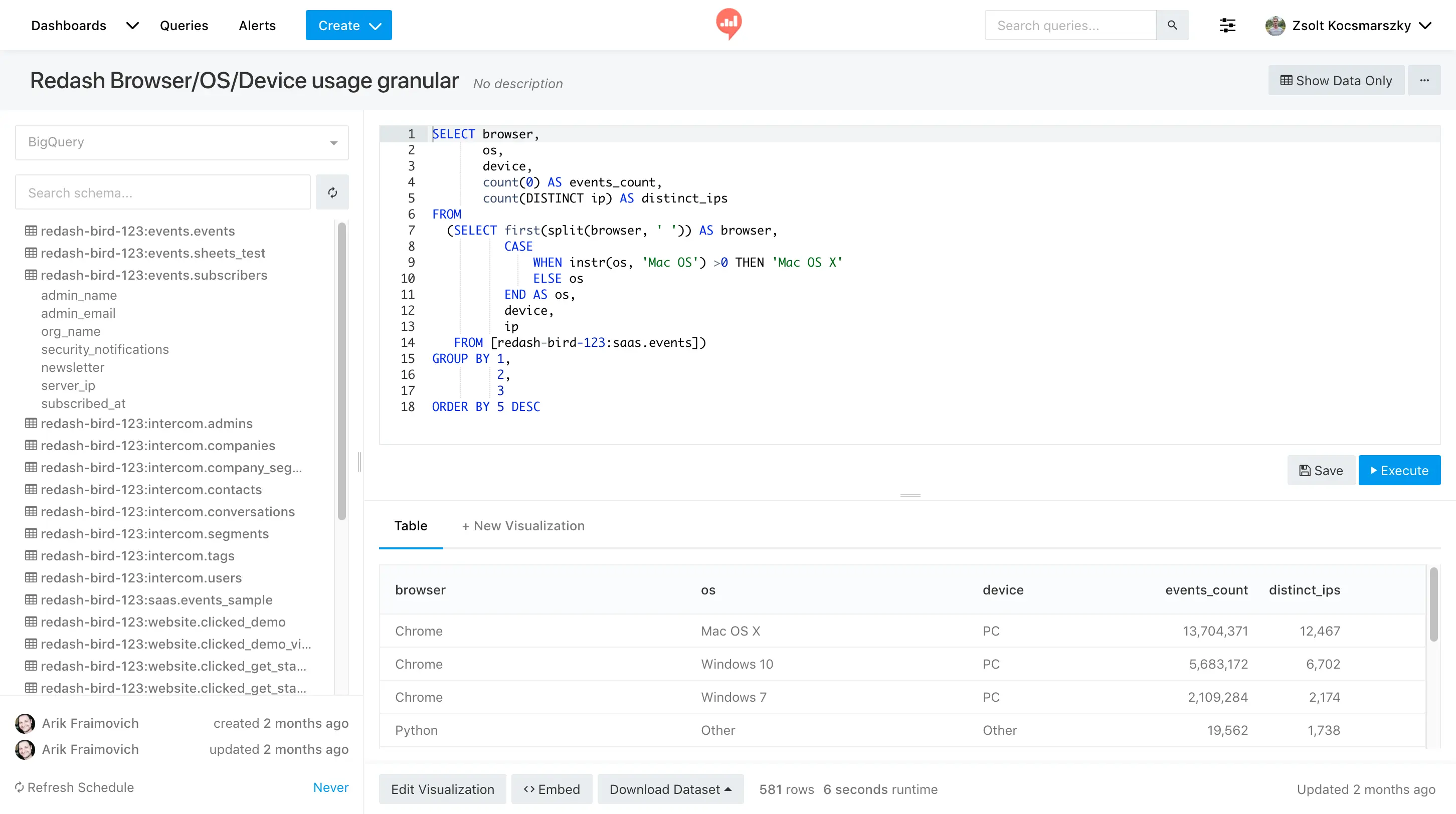
Redash is an SQL-based visualization and dashboarding tool with a genuinely pleasant query editor. Databricks acquired it in 2020; the hosted product became part of Databricks, and the open-source project has been in low-power mode since.
Strengths
- SQL-first workflow: Queries are the primitive; dashboards assemble saved queries.
- BSD 2-Clause: Permissive license, no paid tier to upsell you into.
Cons
- Maintenance is minimal: single-digit merged PRs per month, years since a major release. It runs fine, but you are adopting a codebase, not joining a roadmap.
Verdict: still a fine self-hosted choice for an SQL-literate analytics team with someone willing to own the deployment. For a fresh install today, evaluate Metabase first.
Repository activity
GitHub star wise, all projects have decent traction.
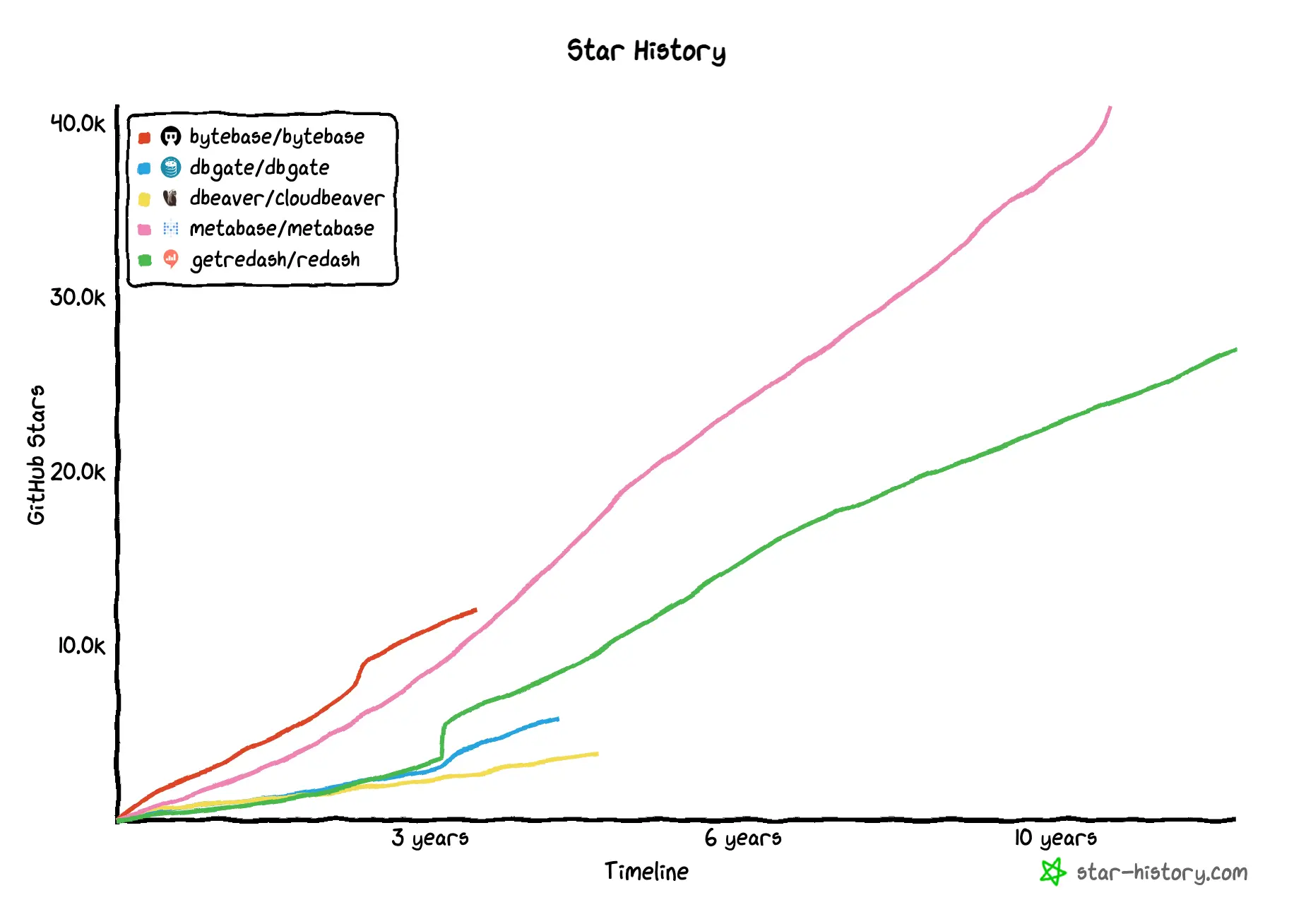
Beyond the star vanity metric, here is the monthly activity between June 11 and July 11, 2026 (pulled from the GitHub API at refresh time):
| Products | Merged PRs | Closed Issues | New Issues | Stars |
|---|---|---|---|---|
| SQL Editor (bytebase) | 274 | 17 | 9 | 14.3k |
| DbGate | 4 | 8 | 12 | 7.1k |
| CloudBeaver | 61 | 5 | 8 | 5.0k |
| Metabase | 1,284 | 396 | 244 | 48.2k |
| Redash | 5 | 1 | 3 | 28.7k |
The stats can mislead, so read them with these caveats:
- SQL Editor ships inside the
bytebase/bytebaserepository, so its merged-PR count reflects the whole platform, not the editor alone. - Metabase's numbers are inflated by cherry-picks across many active release branches, though it would lead this table by any measure.
- Projects that don't run their issue tracker on GitHub make the issue columns meaningless.
- Redash's 28.7k stars against 5 merged PRs is the clearest star-count-vs-liveness gap on the list: stars measure history, not pulse.
The 2026 read: Metabase, CloudBeaver, and Bytebase are actively developed; DbGate is alive but small; Redash is coasting on accumulated goodwill.